
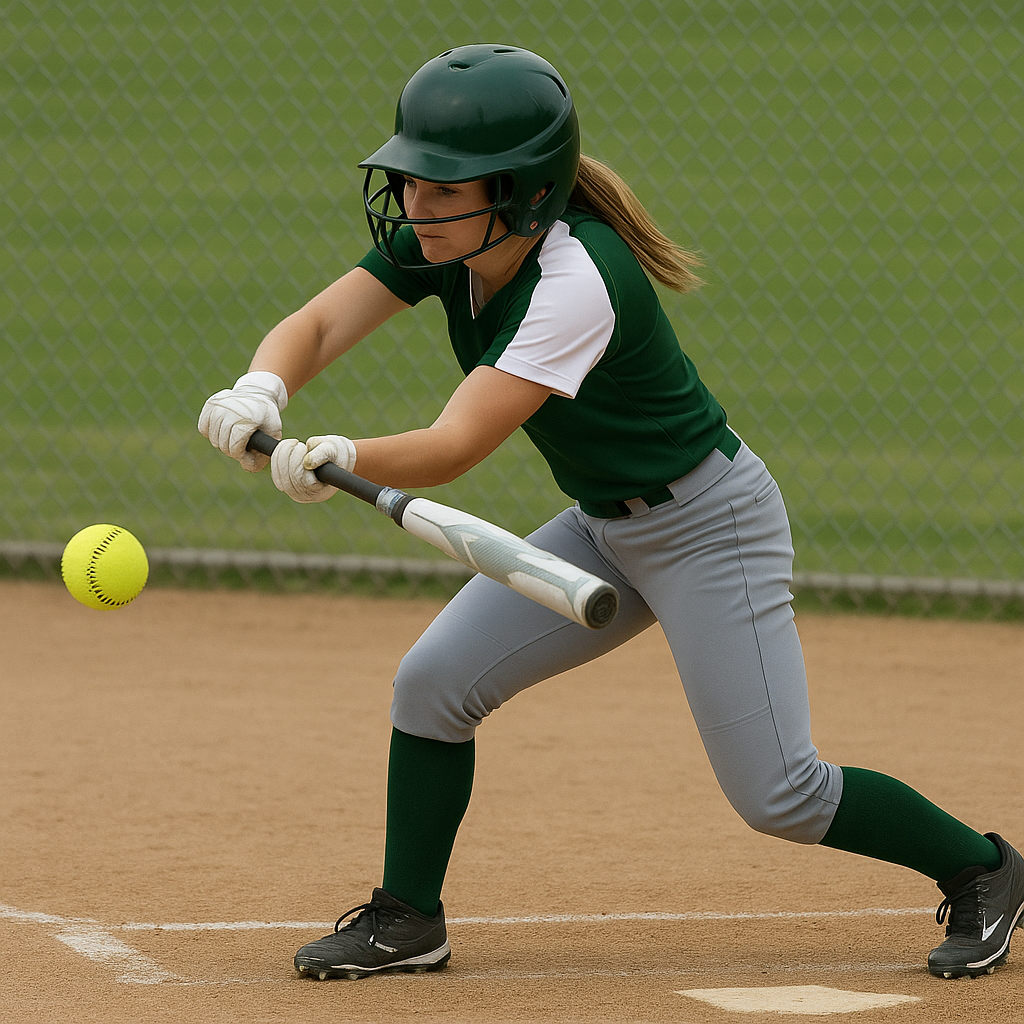
When to Consider Adding Slap Hitting to Your Arsenal
Slap hitting isn’t just a flashy move reserved for speedsters at the top of the lineup — when used with purpose, it’s one of the most disruptive offensive weapons in softball. It can flip a defense on its head, turn ground balls into hits, and put constant pressure on opponents. But knowing when to add slap hitting to your game is just as important as learning the mechanics.
Whether you’re a player trying to level up or a coach thinking about lineup versatility, this guide will help you evaluate the right time to add slap hitting to your arsenal. And if you’re ready to put it into practice, we’ll also share details about our upcoming Slap Hitting Clinic, where you’ll get live instruction and personalized feedback to sharpen your game.
What is Slap Hitting?
Slap hitting is a left-handed hitting technique designed to combine quick contact with explosive speed. Instead of swinging for distance, a slapper controls bat angle and placement while gaining momentum toward first base. The goal isn’t power — it’s to get on base by beating throws, finding gaps, and forcing defenders into mistakes.
Done well, slap hitting adds another dimension to your offense. Pitchers and defenses can’t play you straight up. Infielders creep in. Outfielders adjust. And suddenly, the team has a table-setter who turns routine outs into rallies.
Signs You’re Ready to Try Slap Hitting
Not everyone is a natural slapper, but here are the clear signs you should consider adding it to your game:
- You’ve Got Elite Speed
If you’re one of the fastest players on your team — the one who beats throws, steals bases with ease, and explodes off the line — slap hitting turns your speed into a weapon. Even softly hit balls become infield singles. - You Make Consistent Contact
Slappers thrive on bat-to-ball skills. If you’re already putting the ball in play often and rarely swing and miss, slap hitting can amplify your strengths. - You’re Already a Strong Bunter
Great bunters often transition smoothly to slapping because they understand ball placement, soft touch, and footwork. If bunting is one of your tools, slapping could be the next natural step. - Your Team Needs a Spark
Maybe your lineup has power but lacks a consistent on-base threat. Or maybe you’re a coach looking for ways to generate runs against tough pitching. Adding a slapper forces defenses to adapt and creates chaos on the basepaths. - You’re Young and Still Developing Power
Middle school and early high school players with speed but not yet full strength are perfect candidates. Slap hitting lets you impact games right now while your power continues to develop.
When It’s Not the Right Fit
Slap hitting isn’t for everyone. If you’re a natural power hitter, if you lack quickness, or if you already struggle with timing and contact, this tool may take focus away from your best strengths. Remember: the goal isn’t to be flashy, it’s to be effective.
Getting Started with Slap Hitting
Adding slap hitting requires more than just stepping across the box. It’s a skill that combines mechanics, timing, and footwork. Here’s the progression we recommend:
- Master the bunt — If you can’t control bunts, slapping will feel inconsistent.
- Work on hand control — Choke up and practice contact to all fields.
- Learn the step-through — Timing your step so you’re balanced at contact is essential.
- Target placement — Practice hitting toward the left side or soft liners over the infield.
- Explode out of the box — Your first step matters as much as your swing.
Slap hitting takes repetition and coaching to get right. Which is why…
Why Attend a Slap Hitting Clinic?
Learning slap hitting on your own is tough. The mechanics feel unnatural at first, and small mistakes in footwork or bat angle can stall progress. That’s where focused training comes in.
Our Slap Hitting Clinic is designed for players who want to:
- Add slap hitting to their game for the first time.
- Clean up mechanics and footwork with professional instruction.
- Practice live reps against pitching and front toss.
- Learn how to blend slapping with traditional hitting for maximum versatility.
You’ll work directly with experienced instructors to become dangerous at the plate. Every athlete leaves with drills and a roadmap for continued growth.
 Space is limited — register early to lock in your spot for the next session!
The Payoff: How Slap Hitting Changes Games
Slap hitting isn’t just about getting yourself on base — it’s about changing how the entire defense plays your team.
- Infielders move up, opening holes for other hitters.
- Pitchers change their approach, throwing differently to avoid slappers exploiting weaknesses.
- Teams have to guard bunts, slaps, and full swings, stretching their defensive focus thin.
Even if you only slap 25–30% of the time, you become less predictable and much harder to defend.
Final Thoughts
If you’re fast, make consistent contact, or want to become a more versatile offensive threat, now may be the perfect time to add slap hitting to your arsenal. But don’t try to figure it out alone — one bad habit can take months to unlearn.
That’s why we invite you to be on the lookout for our Slap Hitting Clinics. You’ll get professional instruction, live reps, and the kind of feedback that accelerates your growth. Whether you’re aiming to earn more playing time, move up in the lineup, or simply give defenses nightmares, slap hitting could be the tool that takes your game to the next level.